TutorialGuides
How to set up parental controls on streaming devices and apps
Set up layered parental controls for streaming: PINs and restrictions on Roku, Fire TV, Google TV and Apple TV, app profiles and network options.
Articles on IPTV News are researched, written and edited by the publication's editorial team and published under a shared byline. Every article follows our editorial policy, cites its sources and is corrected openly under our corrections policy. Contact the team at info@iptvnews.site.
Set up layered parental controls for streaming: PINs and restrictions on Roku, Fire TV, Google TV and Apple TV, app profiles and network options.
How network TV tuners turn free antenna broadcasts into streams for phones, TVs and DVR software, what to look for, and the ATSC 3.0 DRM caveat.
How streaming bundles from media companies, telecom providers and platforms work, how to check whether one saves money, and the catches.
How streaming bundles from media companies, telecom providers and platforms work, how to check whether one saves money, and the catches.
How ad-supported streaming tiers work, what features they usually drop, how ads are targeted and how to decide whether an ad tier suits you.
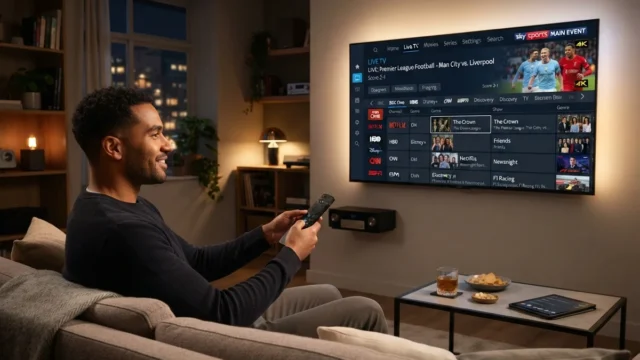
What HDMI-CEC, ARC and eARC do, which audio formats each carries, CEC brand names, and fixes when your TV, soundbar and streaming device clash.
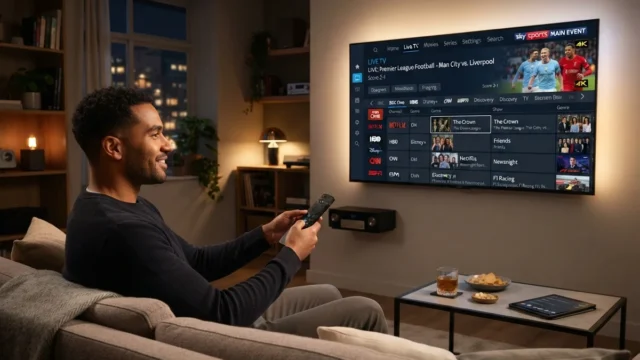
Jellyfin, Plex and Emby compared for live TV and DVR: licensing, tuner and playlist support, guide data, transcoding and client apps.
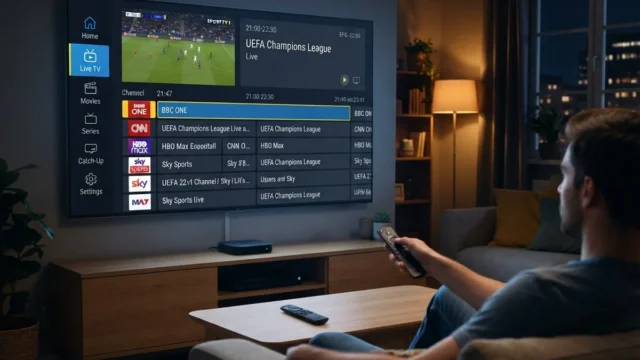
Multicast vs unicast explained: how operator IPTV sends one copy of a channel to many homes, how IGMP channel changes work, and why apps use unicast.
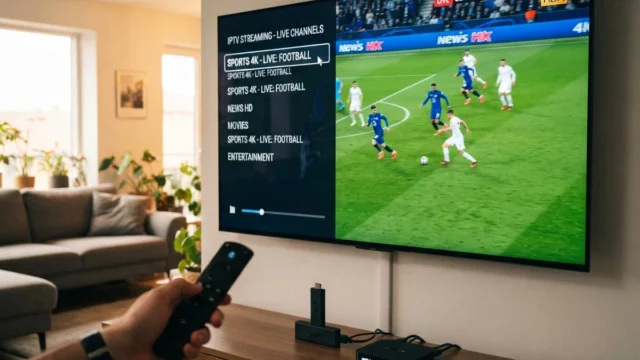
H.264, HEVC, VP9, AV1 and VVC explained: how video codecs compare on efficiency and device support, and why hardware decoding matters.
Wi-Fi or Ethernet for streaming? When Wi-Fi is fine, when a wired connection really matters, and how MoCA, powerline and mesh compare.
How streaming DRM works, from encryption and license servers to security levels, why some devices only get SD or HD, and what CENC and EME do behind the scenes.
Low-latency live streaming explained: why streams lag behind broadcast, where the delay comes from, and how LL-HLS, LL-DASH and WebRTC cut it.